By nine in the morning the queue outside the café opposite the Palais is already four deep, and almost everyone in it is wearing a lanyard. The badges are colour-coded by access level, though no one admits to checking. Waiters move between the tables with the practised indifference of people who have watched this particular crowd arrive every June for years. The espresso is small; the conversations are not. Somewhere down the boulevard a sound system is being tested on a private beach, and the bass carries over the traffic.
This is Cannes in the third week of June, when the city belongs not to film but to advertising. The Cannes Lions International Festival of Creativity runs from 22 to 26 June this year — Monday to Friday, five days — and for that stretch the Croisette becomes the working address of an entire industry. The agencies, the platforms, the consultancies, the marketing departments, the people who make the things that interrupt your evening: they are all here, and most of them are not in the building.
This is the festival’s 73rd edition, and it began somewhere else entirely. In September 1954, the London-based Screen Advertising World Association staged the first International Advertising Film Festival in Venice — 130 delegates, 187 entries from fourteen countries, a single category, and a Grand Prix that went to a three-minute Italian commercial for Chlorodont toothpaste. For three decades the event alternated between Venice, Monte Carlo and Cannes before settling permanently on the Riviera in 1984. The trophy keeps its origins: the Lion takes its form from the winged lion that has watched over Venice’s Piazza San Marco for a thousand years. The name never changed.
What hasn’t changed either is the basic proposition. People who make advertisements wanted the recognition that people who make films receive a few weeks earlier, in the same town, on the same red carpet. Seventy years on, they have it — and rather more besides.
The Palais and everything around it
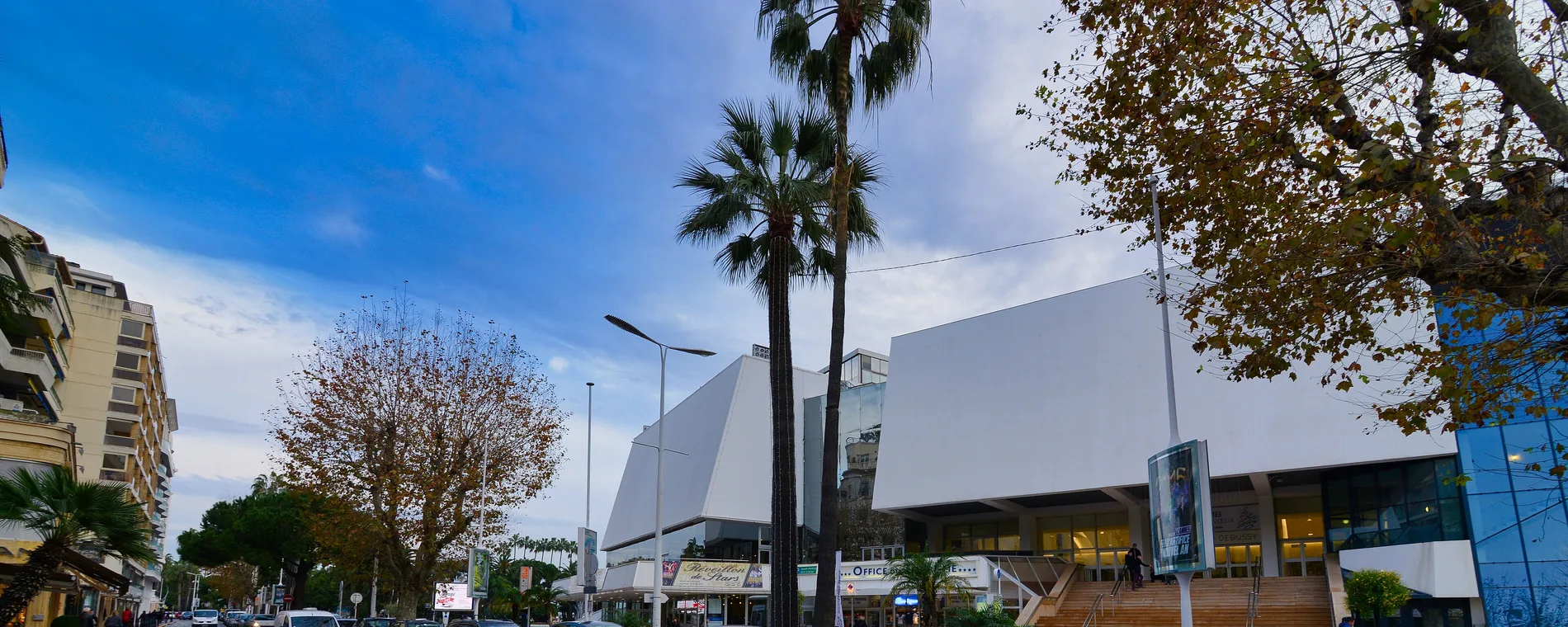
The Palais des Festivals is the official heart of the week. Inside, the programme runs from the morning keynotes to the evening awards, where the Lions are handed out category by category under the stage lights. This year the honours arrive early and land hard: on the Monday, Apple’s Eddy Cue takes the Entertainment Person of the Year award after a keynote shared with the producer Jerry Bruckheimer; on the Tuesday, Oprah Winfrey collects the LionHeart, the festival’s recognition for those who have used their platform to drive lasting change. This is where the festival photographs itself — the stage, the trophies, the standing ovations.
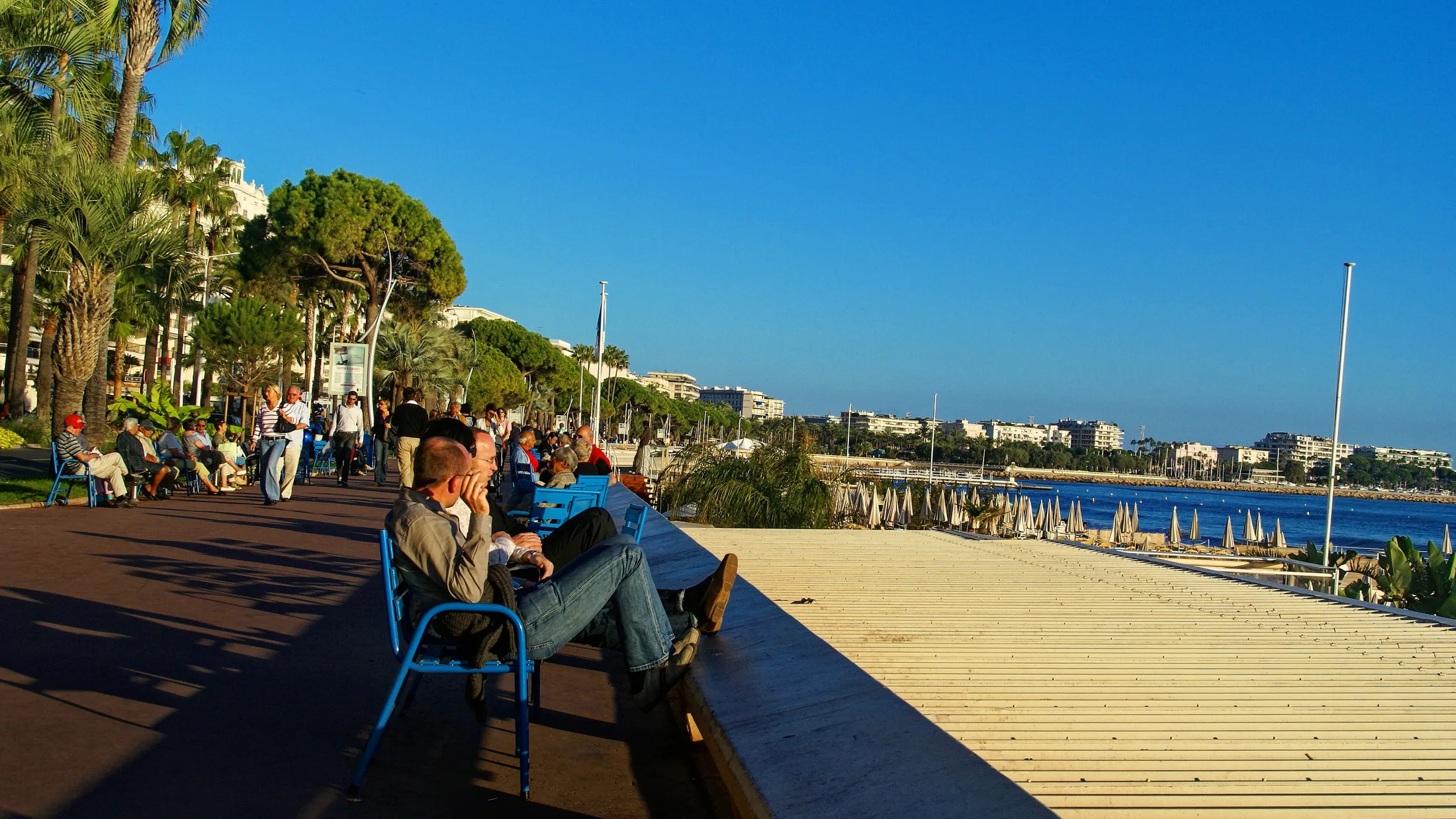
But spend a day here and you notice how much of the crowd is facing the other way, toward the sea and the hotels and the beaches that brands rent for the week and rebuild in their own image. Stretches of sand that are public the rest of the year carry corporate names for these few days. The convention centre is the official venue; the actual venue is the city.
Newcomers underestimate this. The sessions inside the Palais are useful and occasionally remarkable — this year’s programme runs to some 150 hours and 500 speakers — but the conversations that matter tend to happen on a hotel terrace, on a chartered yacht in the Vieux Port, or in a beach club with a plastic cup of rosé going warm in the sun. The festival keeps an official schedule and an unofficial one, and the senior people spend their afternoons on the second.
A short geography of the week
The hotels do most of the organising without meaning to. The Carlton, the Martinez, the Majestic and the JW Marriott line up along the Croisette like a row of decision points, and proximity to them shapes everything. The closer your room sits to the Palais, the more of Cannes you can cross on foot — which matters more than it sounds when the temperature climbs and your day becomes a relay of half-hour meetings.
The Martinez, all art-deco lines and a permanent crowd, has long worked as an informal headquarters, its beachfront hosting panels and parties in roughly equal measure. The Carlton takes on a new role this year as the home of LIONS Sport, the festival’s first dedicated sports-marketing programme, running across the Wednesday and Thursday for a deliberately small room — a few hundred delegates, one of them likely to be cornering the Formula 1 driver George Russell between sessions.
The yachts moored a couple of hundred metres from the Palais are their own category of venue. Companies take them as private perimeters — controlled, quiet, pointedly exclusive — for the kind of meeting that doesn’t survive a crowd. Most never leave the harbour. They are real estate that happens to float.
Rooms along the Croisette sell out the previous autumn, sometimes earlier. Restaurants stop seating walk-ins by lunch. The city tips into a state of polite saturation, and the locals navigate around it with the long patience of people who know it passes by Saturday.
What the week is actually like
The texture of Cannes Lions is its own thing: the heat, the constant low-grade calculation of whether the next conversation is worth crossing the boulevard for, the particular tiredness of people who have been talking since breakfast. There is a great deal of rosé, drunk with a casualness that suggests a working fluid rather than a drink. And there are the badges, which everyone pretends not to read and everyone reads.
The behaviour is recognisably that of an industry watching itself. People come to compete, to recruit, to sell, to be seen and — somewhere in the schedule — to learn. The programme tracks where the business has turned its attention. This year brings a new Creative Brand Lion that rewards the systems and cultures behind sustained work rather than the single standout campaign; a dedicated creator-economy strand produced with Adobe; and a one-day B2B summit on the Tuesday. On the Friday, a new closing stream called Cannes Lions Deconstructed offers an onstage post-mortem of the week before anyone has quite recovered from it.
What strikes you, watching it all, is how little the trophies seem to drive the energy on the ground. The awards are the official reason everyone is here. The actual reason is everyone else being here too.
The glamour is borrowed from the film festival next door. The business is entirely real.
The city after
By Saturday the badges are gone. The beach clubs revert to their summer names, the sound systems are packed away, and the Croisette returns to the holidaymakers and the families and the ordinary, unhurried business of a Mediterranean town in June. The yachts cast off. The hotels exhale. Up in Le Suquet, the old town that spends the week looking down on the spectacle, nothing has changed at all.
For five days, an industry that spends the rest of the year telling everyone else how to be seen gathers on one walkable stretch of coast and tries to do the same for itself. There is something clarifying in that. The work that wins on the Palais stage will be studied for a year; the conversations on the terraces will quietly shape rather more than that. What began because admen wanted to be taken as seriously as filmmakers has become, seven decades later and a few weeks after the cameras leave, the thing the film festival never quite built: not a red carpet, but a marketplace.